



Agentic, MCP, Copilot, RAG, Vibe Coding and the Language of Modern AI Development: The Definitive Glossary of AI Coding Terms
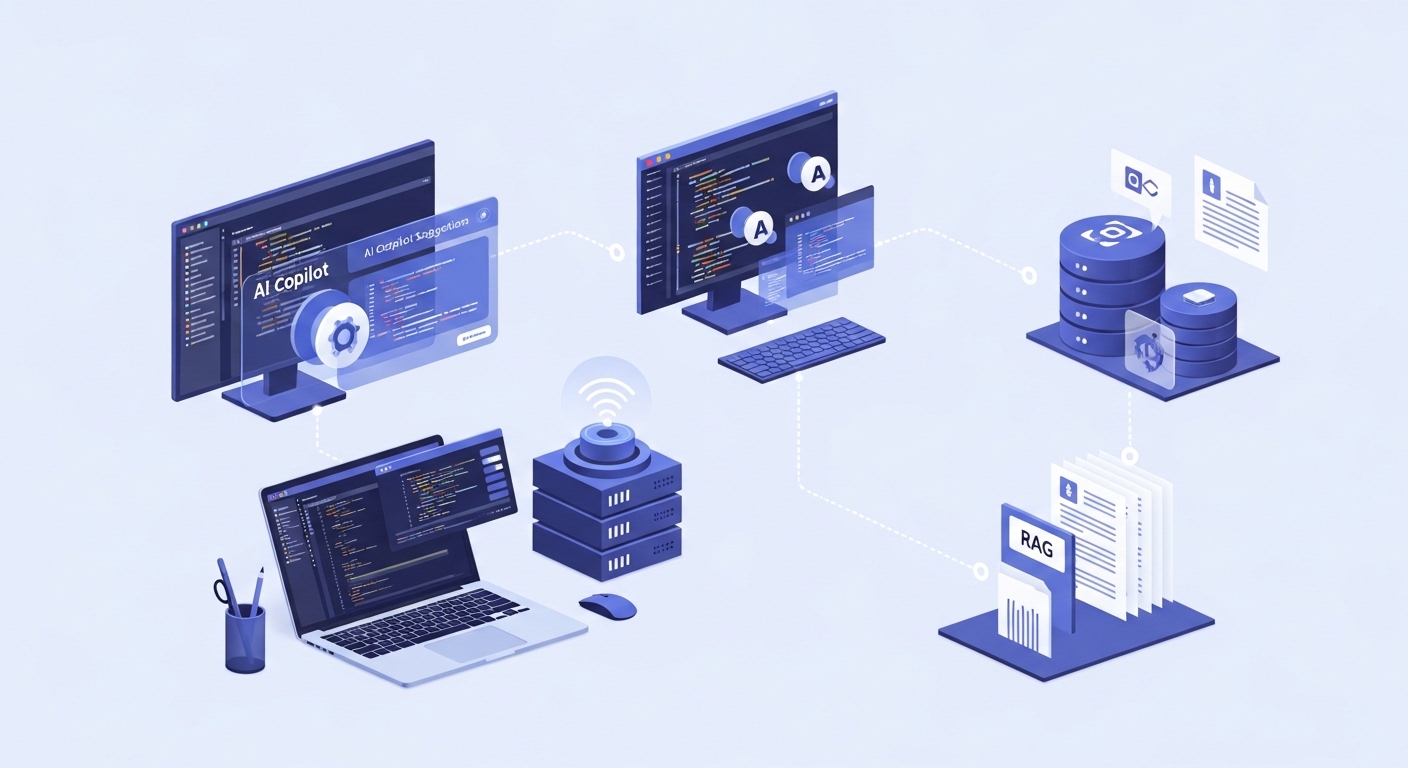
Instead of isolated prompts, today’s AI-powered workflows often combine copilots, coding agents, retrieval pipelines, and structured integrations with developer tools. These systems help developers navigate codebases, generate implementations, debug issues, and accelerate experimentation.
As this ecosystem has matured, a new technical vocabulary has emerged. Terms such as agentic systems, MCP, RAG, tool calling, context windows, and vibe coding are now common in architecture discussions, developer documentation, and AI tooling platforms.
Understanding this terminology helps engineers, product teams, and technical leaders evaluate new tools and better understand the infrastructure behind modern AI-assisted development.
Agentic Systems
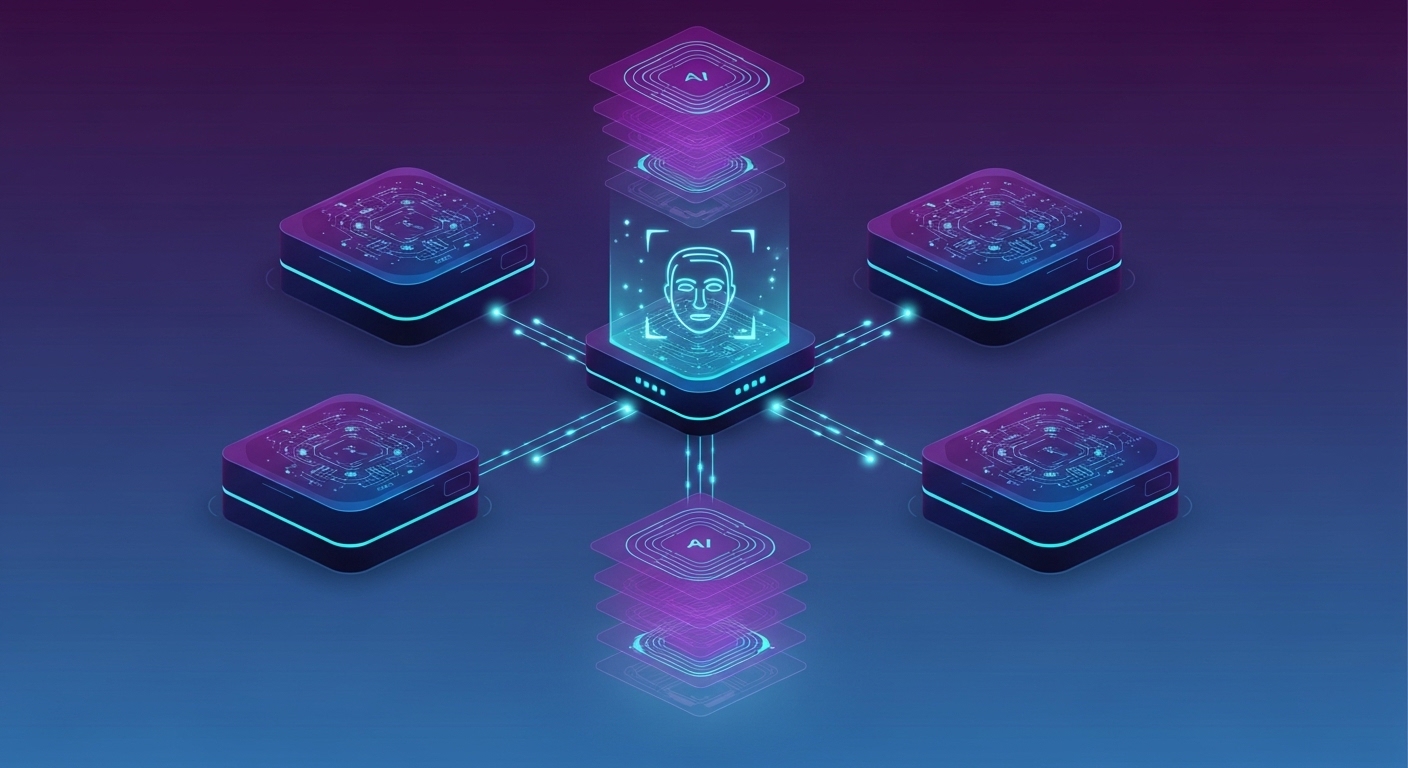
Agentic systems are AI architectures designed to perform multi-step tasks autonomously by interacting with tools, environments, and external data sources.
Instead of responding once to a prompt, an agentic system can break a task into steps and iteratively work toward a result. In software development environments, this may involve actions such as:
- inspecting a repository
- generating code
- running tests
- analyzing errors
- revising the implementation
Agentic workflows combine reasoning models with planning loops, tool execution, and memory systems.
Copilot
A copilot is an AI assistant embedded directly into the developer workflow. It typically operates inside code editors, terminals, or documentation environments.
Rather than acting independently, copilots collaborate with developers and help accelerate routine engineering tasks.
Modern copilots increasingly integrate with repositories, documentation systems, and developer tooling.
MCP (Model Context Protocol)
MCP, or Model Context Protocol, is a standard that enables AI models to interact with external systems through structured interfaces.
Instead of embedding large amounts of raw context into prompts, MCP allows models to access information from connected tools such as:
- file systems
- APIs
- documentation platforms
- issue trackers
- development environments
This structured access helps models retrieve the right information when needed and improves reliability when working with real projects.
RAG (Retrieval-Augmented Generation)
Retrieval-Augmented Generation (RAG) is a method that allows AI systems to retrieve external information before generating responses.
Instead of relying only on training data, the system retrieves relevant documents and includes them in the model’s context.
A typical RAG workflow includes three steps:
- A query is converted into a vector embedding
- Relevant documents are retrieved from a vector database
- The retrieved information is added to the model’s context before generation
RAG is widely used to enable AI assistants to understand internal documentation and codebases.
Context Window
The context window defines how much information a model can process during a single interaction.
In development workflows, context may include:
- source code
- documentation
- conversation history
- tool outputs
- configuration files
Larger context windows allow models to reason across more files or longer conversations, though careful context selection remains important for maintaining response quality.
Tool Calling
Tool calling allows AI models to execute predefined functions during a task.
Instead of estimating an answer, the model can request the execution of a tool and use the result to continue its reasoning process.
Common examples include:
- running tests
- querying APIs
- reading files
- performing calculations
- executing code in a sandbox
Tool calling is one of the fundamental building blocks behind modern AI development agents.
Vibe Coding
Vibe coding refers to an informal style of development where engineers collaborate with AI systems to rapidly explore ideas and prototypes.
Instead of writing every line manually, developers may describe functionality in natural language and refine the generated code through iteration.
This approach is often used for:
- rapid prototyping
- early product exploration
- experimental tooling
- internal utilities
While useful for experimentation, production systems still require traditional engineering practices such as code review, testing, and architecture validation.
Agent Framework
An agent framework is a software system used to coordinate how AI agents operate.
It typically manages planning, tool usage, memory, and evaluation.
Agent frameworks provide the structure that allows models to behave more like systems rather than isolated chat responses.
Embeddings
Embeddings are numerical representations of content such as text, code, or documents.
They allow systems to measure similarity between pieces of information based on meaning rather than exact wording.
In AI development environments, embeddings are commonly used for:
- semantic search
- code retrieval
- documentation matching
- clustering related information
Embeddings are a foundational component of many retrieval systems.
Vector Database
A vector database stores embeddings and enables fast similarity search across large datasets.
In AI coding environments, vector databases are often used to retrieve:
- relevant code snippets
- documentation pages
- knowledge base articles
- architectural notes
This allows AI assistants to access contextually relevant information from large repositories.
Prompt Engineering
Prompt engineering is the practice of designing instructions that guide models toward reliable outputs.
Prompts may include structured instructions, examples, constraints, or context about the environment.
Although prompts remain important, many modern AI systems combine prompting with additional infrastructure such as retrieval pipelines and tool integrations.
Function Calling
Function calling allows AI models to generate structured requests that trigger predefined functions in a software system.
Unlike plain text output, function calls return machine-readable results that can be processed programmatically.
Examples include:
- retrieving file contents
- executing scripts
- querying system state
- running validation checks
This mechanism helps software systems integrate AI models into real workflows.
Multi-Model Systems
A multi-model system uses different AI models for specialized tasks within the same workflow.
Using specialized models often improves performance, cost efficiency, and reliability.
AI Coding Agent
An AI coding agent is a system capable of completing multi-step programming tasks with limited human input.
Typical capabilities include:
- exploring repositories
- implementing features
- fixing bugs
- writing tests
- validating outputs
Coding agents combine reasoning models with planning systems, tool integrations, and evaluation loops.
Autonomous Development Loop
An autonomous development loop is a cycle in which an AI system repeatedly generates, evaluates, and improves code until a goal is reached.
A typical loop includes:
- analyzing the task
- generating or modifying code
- running validation steps
- reviewing the results
- iterating if necessary
This pattern appears frequently in agent-based development workflows.
Synthetic Data
Synthetic data refers to data generated artificially rather than collected from real-world usage.
In AI and software development, synthetic data is often used for:
- testing systems
- expanding training datasets
- simulating edge cases
- protecting sensitive information
Synthetic datasets allow teams to experiment and evaluate systems without exposing private or production data.
FAQ
What is an agentic system in AI development?
An agentic system is an AI architecture capable of planning tasks, using tools, and iterating through multiple steps to reach a goal rather than producing a single response.
What does MCP stand for?
MCP stands for Model Context Protocol, a standard used to connect AI models with external tools, data sources, and developer environments.
What is RAG used for?
RAG allows AI systems to retrieve relevant documents or code before generating an answer, improving accuracy when working with specific knowledge sources.
What is vibe coding?
Vibe coding describes a fast, collaborative development style where developers work interactively with AI systems to prototype and explore ideas.
Are AI coding agents replacing developers?
AI coding agents are designed to assist with programming tasks, but software engineering still requires human oversight, architecture design, and quality assurance.