



Productivity with AI Agents in 2026: Choosing the Right Agent for Each Goal
From Helping to Owning Work
Earlier AI tools focused on assistance. You asked, the model responded. That interaction still exists, but it is no longer where most productivity gains come from.
Modern agents can take responsibility for tasks. They plan steps, use tools, check results, and try again when something fails. Humans step in mainly to define goals and review outcomes.
This reduces the need to repeatedly explain context and dramatically cuts coordination overhead.
Fewer Tools, Fewer Handovers
One of the most noticeable changes is how agents move across tools on their own.
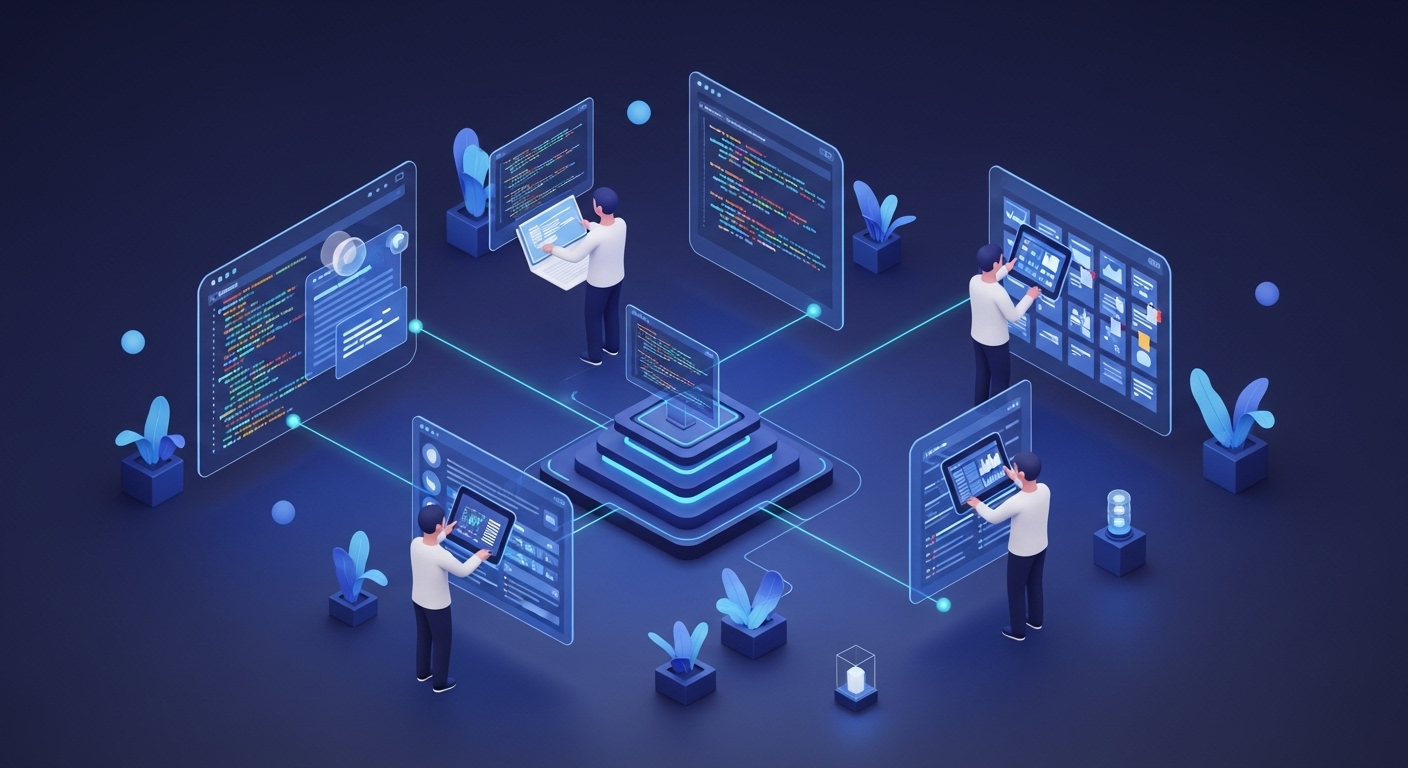
Instead of people jumping between an IDE, a ticketing system, documentation, and dashboards, agents increasingly operate across all of them in a single flow. They read requirements, inspect data, make updates, and report back with context already assembled.
Productivity improves not because tasks are faster, but because handovers disappear.
Supervision Becomes the Core Skill
As agents do more, human work shifts upward.
Teams spend less time executing steps and more time supervising decisions. Reviewing an outcome is faster than performing every intermediate action, especially when the agent keeps logs and reasoning trails.
This favors clarity over control. Clear constraints, good acceptance criteria, and well defined boundaries matter more than detailed instructions.
Technical and Non Technical Work Blend Together
AI agents do not distinguish sharply between code, documents, and data.
Spreadsheets become structured inputs. Documents become editable systems of record. Dashboards become part of the reasoning loop instead of static reports.
As a result, tools once built for developers are now used across product, operations, and strategy teams. At the same time, engineers rely on agents for planning, coordination, and reporting work that used to pull them out of deep focus.
Productivity Is About Flow, Not Volume
Teams using agents effectively report fewer interruptions rather than higher output counts.
There are fewer meetings just to align on status. Less context switching between tools. Faster recovery when something breaks, because agents retry automatically instead of waiting for attention.
The best agents are not the most creative ones. They are the ones that keep people in flow.
Guardrails Increase Speed
Constraints may seem like friction, but in agent driven workflows they increase productivity.
When agents operate with clear permissions, deterministic modes, and approval checkpoints, teams trust them more. That trust reduces rework and hesitation, which ultimately saves time.
Safety and speed stop being tradeoffs when guardrails are part of the design.
Matching AI Agents to Productivity Goals
Not all AI agents are built for the same type of work. Productivity improves when teams intentionally match the agent to the objective instead of forcing one tool to do everything.
What Changes for Teams
The biggest gains come from organizations that design work with agents in mind from the start.
They decide what humans should always own and what agents can carry forward autonomously. They treat AI agents as part of the operating model, not as optional helpers.
In 2026, productivity is less about doing everything faster and more about deciding what no longer needs to be done manually.