



Microsoft Fara-7B: The Lightweight Computer Use Agent Transforming AI Automation

What Is Fara-7B
Fara-7B is a small language model engineered specifically to act as a computer use agent. Rather than output simple text replies, it perceives a computer screen through screenshots and issues direct actions such as mouse clicks, typing, scrolling, visiting URLs, or performing searches. It uses the web like a human would.
It is built on top of a base multimodal model chosen for its strong grounding capabilities and long context support of up to 128k tokens, allowing the model to reason over sequences of UI interactions.
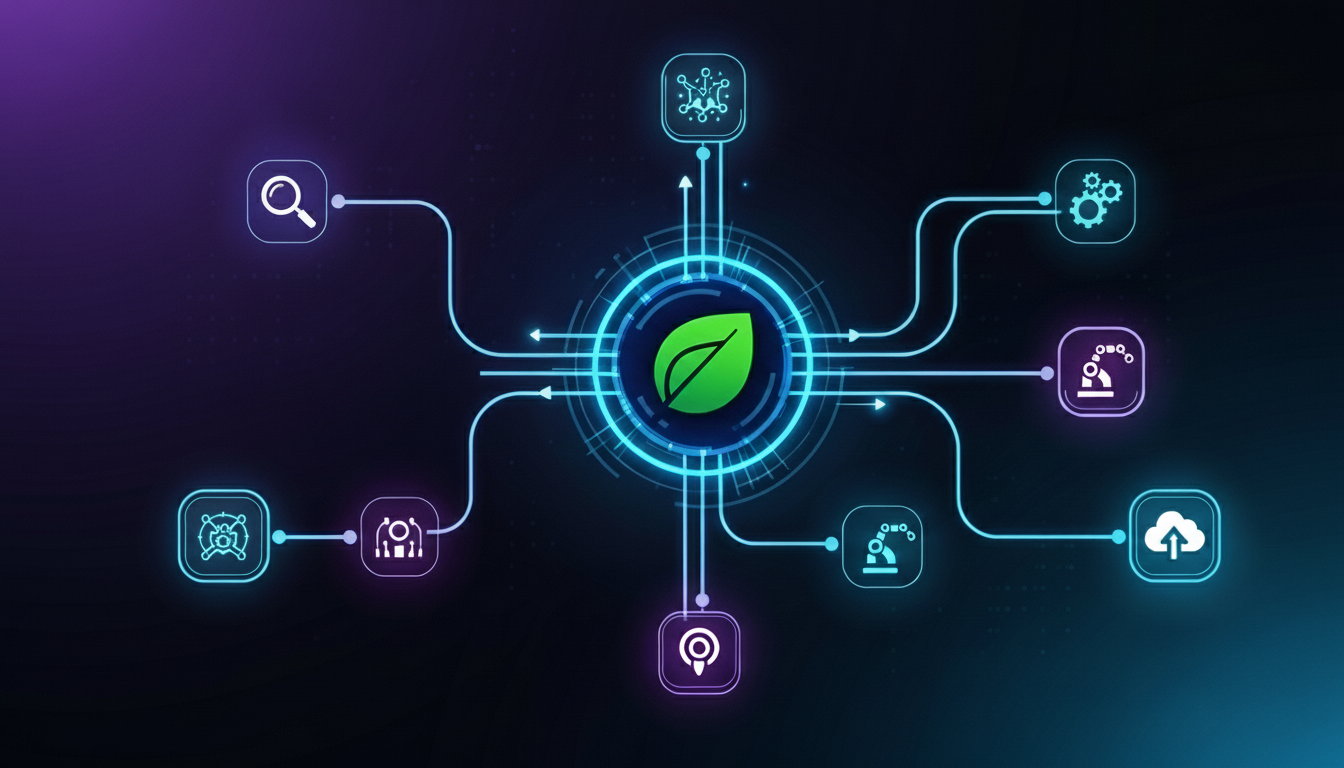
Instead of requiring multiple agents and tools, Fara-7B compresses everything into a single model. It consumes the user’s goal, a history of prior actions, and screenshots, then outputs a reasoning trace followed by a tool call that describes the next action with arguments like coordinates or text.
This design allows Fara-7B to run locally on a standard device, reducing latency, protecting data privacy, and avoiding heavy cloud infrastructure.
How Fara-7B Learned to Use Computers: Synthetic Data at Scale
One of the main challenges for computer use agents is the lack of large, high quality datasets that show how real humans navigate the web step by step. To solve this, Microsoft built a data generation engine called FaraGen.
FaraGen starts with a seed set of public URLs across categories like shopping, travel, forums, and entertainment. It uses language models to generate realistic user tasks such as buying a product, booking tickets, or comparing information.
A multi agent system simulates user interactions. An orchestrator agent plans high level strategies, a WebSurfer agent executes low level UI actions like clicking and typing, and a UserSimulator agent provides updated instructions when needed.
After completing simulated tasks, a verification pipeline filters out only the successful trajectories. This ensures realistic, high quality data.
The final dataset contains more than one hundred forty five thousand verified trajectories and over one million steps across varied websites and task types.
Using this dataset, Fara-7B was trained with supervised fine tuning to follow a consistent loop: observe the screen, reason about the next action, and act. It learned to replicate multi step UI workflows directly from screenshots and past interaction history.
What Fara-7B Can and Cannot Do: Benchmarks and Capabilities
Fara-7B has been tested on standard web agent benchmarks as well as a new benchmark created to reflect real world tasks. The results show strong performance for a model of its size.
Benchmark success rates:
Fara-7B outperforms other seven billion parameter agents such as UI TARS 1.5 7B and, in many tasks, performs competitively with agents built on much larger language models.
It also requires fewer steps to complete tasks. Fara-7B averages around sixteen steps per task versus forty one steps for UI TARS 1.5 7B, showing significantly more efficient action planning.
Common use cases include:
- Filling out online forms
- Booking travel or event tickets
- Comparing prices across retailers
- Searching for information and summarizing results
- Managing online accounts or repetitive web workflows
Because it interacts with visual UI, Fara-7B can operate even when a website lacks helpful metadata or uses non standard HTML structures.
Privacy, Efficiency, and the On Device Advantage
One of the strongest advantages of Fara-7B is its ability to run entirely on device. This brings several benefits for enterprises and developers.
- Data privacy, since sensitive browsing data and form inputs can remain local
- Lower latency through reduced network dependency
- Reduced cost by avoiding heavy cloud compute and ongoing API usage
- Simpler integration because Fara-7B is a single model rather than a complex orchestrated system
These characteristics make Fara-7B well suited for enterprise internal tooling, privacy sensitive automation, and scalable AI agents embedded inside applications.
Known Limitations and Responsible Use Considerations
Fara-7B is powerful, but it has important limitations.
- It may fail on complex, multi step instructions or deeply nested workflows
- Layout changes in websites can break behavior because it reasons from pixel based views of the UI
- It should not be trusted with high risk tasks involving money, credentials, or irreversible actions without strict safeguards
- Logs, transparency, and confirmation prompts are essential for safe operation
- Sandbox environments are recommended for initial experimentation and testing
Because of these constraints, Fara-7B should be viewed as a tool to augment workflows, not as a replacement for human judgment.
Why Fara-7B Matters for Engineering and Automation Teams
For teams building internal automation, AI driven workflows, or productivity tools, Fara-7B offers a compelling foundation.
- It can automate repetitive web tasks such as data entry, information collection, and account updates
- It enables private automation by running on local hardware
- It can be fine tuned for internal dashboards, back office systems, and custom admin tools
- It works on consumer grade GPUs, making experimentation accessible to smaller teams
- It supports lightweight, low cost prototypes for agentic applications
The mix of speed, privacy, cost efficiency, and practical performance makes Fara-7B a strong option for real world automation and embedded AI systems.
Fara-7B represents a shift toward compact, efficient, on device AI agents that can perform real world web tasks. Through synthetic data generation, careful training, and a single model design, it shows that small models can deliver robust agentic behavior without the cost and infrastructure associated with frontier scale systems.
It is not perfect, and it requires safeguards, but Fara-7B demonstrates a clear path for the future of practical AI automation. For developers and organizations exploring intelligent workflows, it stands out as one of the most promising tools in the emerging class of lightweight computer use agents.