



Best AI Coding Agents for Small Teams vs Enterprise Engineering
What Small Teams Need From AI Coding Agents
Small teams typically optimize for speed, leverage, and minimal overhead. Engineering decisions are tightly coupled to product delivery, and tools are expected to reduce cognitive load rather than introduce new process.
For these teams, the most valuable AI coding agents share a few traits.
They operate directly inside the IDE, reducing context switching. They can reason across an entire codebase without heavy configuration. They keep humans in the loop while still handling meaningful chunks of work autonomously.
Risk tolerance is usually higher, but time for setup and maintenance is low.
Best Fit AI Coding Agents for Small Teams
IDE based agentic tools tend to perform best in this environment.
Cursor Agent stands out for small teams because it can coordinate multi file changes, refactors, and feature scaffolding while remaining tightly integrated into day to day development. It accelerates execution without forcing teams to redesign their workflows.
Windsurf also aligns well with small teams that want deeper agentic behavior without giving up control. Its strength is maintaining shared project context while supporting long running tasks across the stack.
Fully autonomous agents can be attractive for experimentation, but many small teams find that reliability and predictability matter more than maximum autonomy once a product reaches active users.
What Enterprise Engineering Teams Need From AI Coding Agents
Enterprise environments introduce a very different set of constraints. Codebases are larger, teams are distributed, and changes must pass through layers of review, testing, and compliance.
In this context, AI coding agents are less about speed at all costs and more about consistency, auditability, and safety.
Enterprises need agents that respect existing processes. They must integrate with version control policies, CI pipelines, security tooling, and access controls. Autonomous execution without traceability becomes a liability rather than an advantage.
Best Fit AI Coding Agents for Enterprise Engineering
Enterprise teams tend to favor agentic systems that are configurable, observable, and bounded.
IDE integrated agents are often preferred because they preserve established workflows. They assist with analysis, refactoring, and implementation while ensuring developers remain accountable for changes.
Agent frameworks that allow customization and internal hosting are also attractive, particularly when organizations want to experiment with autonomy inside controlled environments. Open source agent platforms can fit here, but only when paired with strong internal engineering maturity.
Purely autonomous agents that operate end to end with minimal oversight are usually limited to sandboxed use cases such as internal tooling, migrations, or research projects.
Autonomy Versus Control
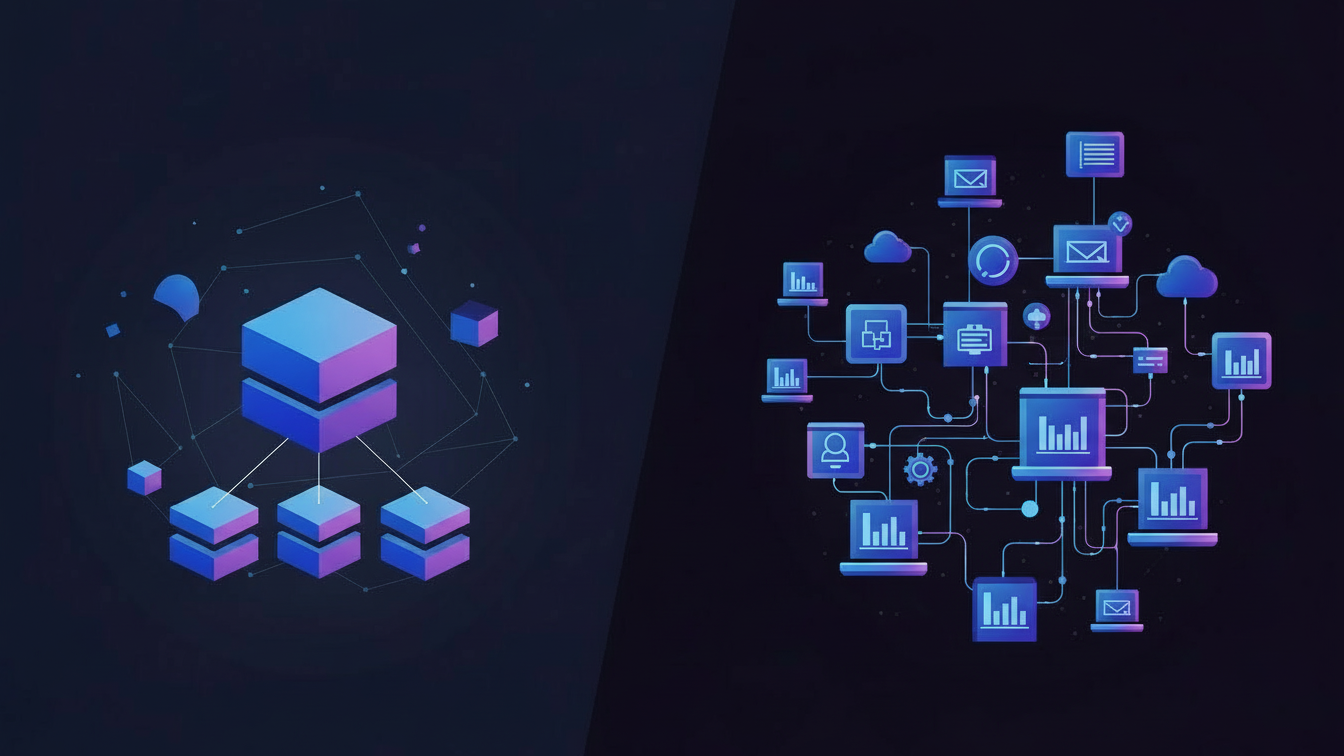
The core difference between small teams and enterprise engineering is not technical capability but tolerance for uncertainty.
Small teams benefit from tools that collapse planning and execution into a single loop. Enterprises benefit from tools that expose reasoning, decisions, and outcomes clearly, even if that slows things down.
This is why the same AI coding agent can feel transformational in one environment and unusable in another.
Choosing the Right Agentic Approach
Rather than asking which AI coding agent is best overall, teams should ask where autonomy creates leverage and where it creates risk.
Small teams should prioritize agents that reduce friction and accelerate shipping without introducing heavy governance requirements.
Enterprise teams should prioritize agents that integrate cleanly into existing systems, preserve human accountability, and offer transparency into how decisions are made.
AI coding agents are reshaping software development, but their impact depends heavily on organizational context. The tools that empower small teams to move faster are not always the same ones that scale safely across enterprise engineering organizations.
Understanding this distinction is essential for adopting agentic AI in a way that delivers real value rather than operational complexity.